Advancements in Dental Care
Dental Implants That Restore More Than Your Smile
At Advancements in Dental Care, Dr. Aust has helped thousands of patients rediscover the confidence that comes with a complete, natural-looking smile. If you're ready to stop hiding and start living — dental implants may be the answer you've been looking for.
Real Patients. Real Results.
The Difference We Make
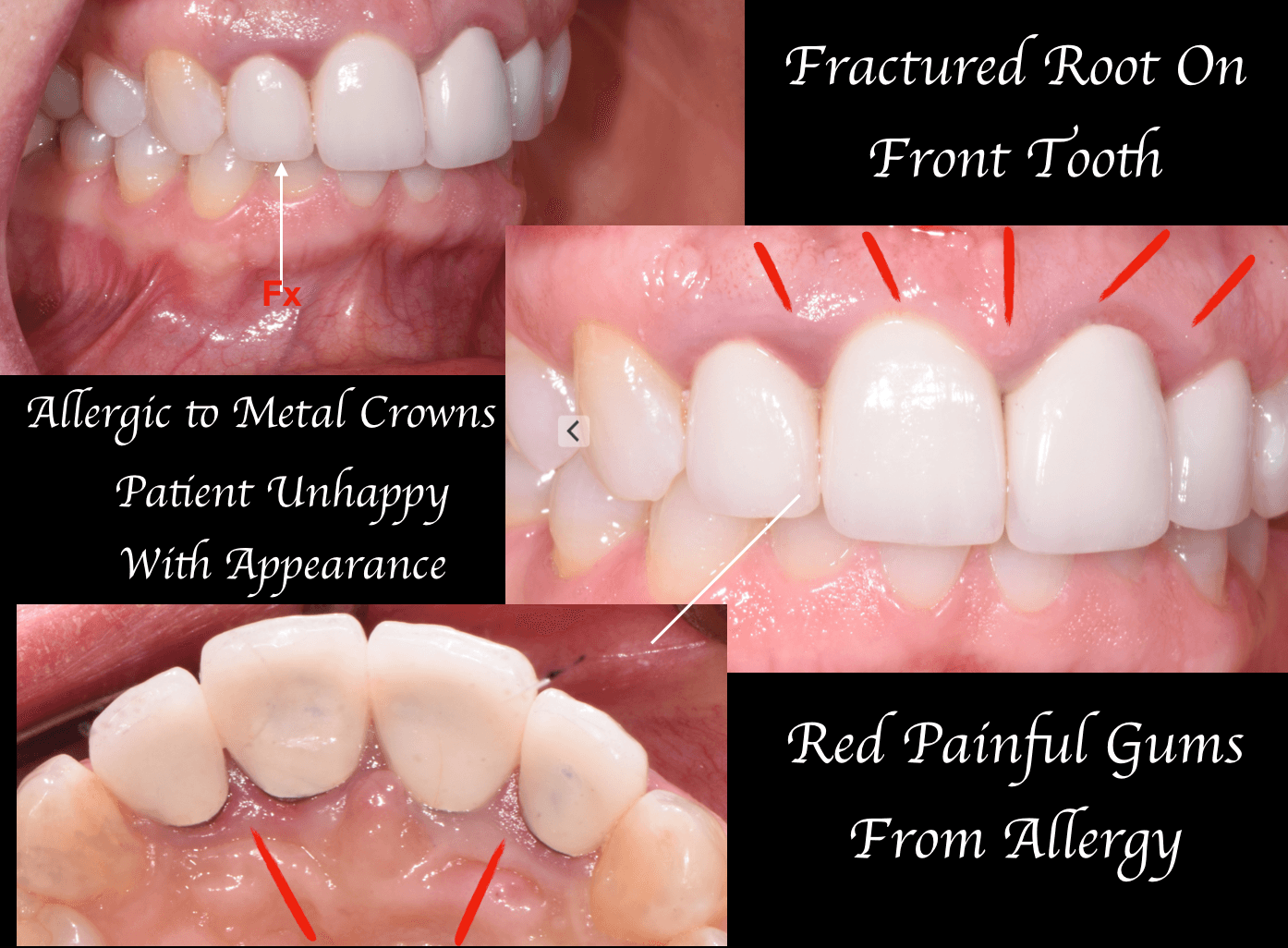
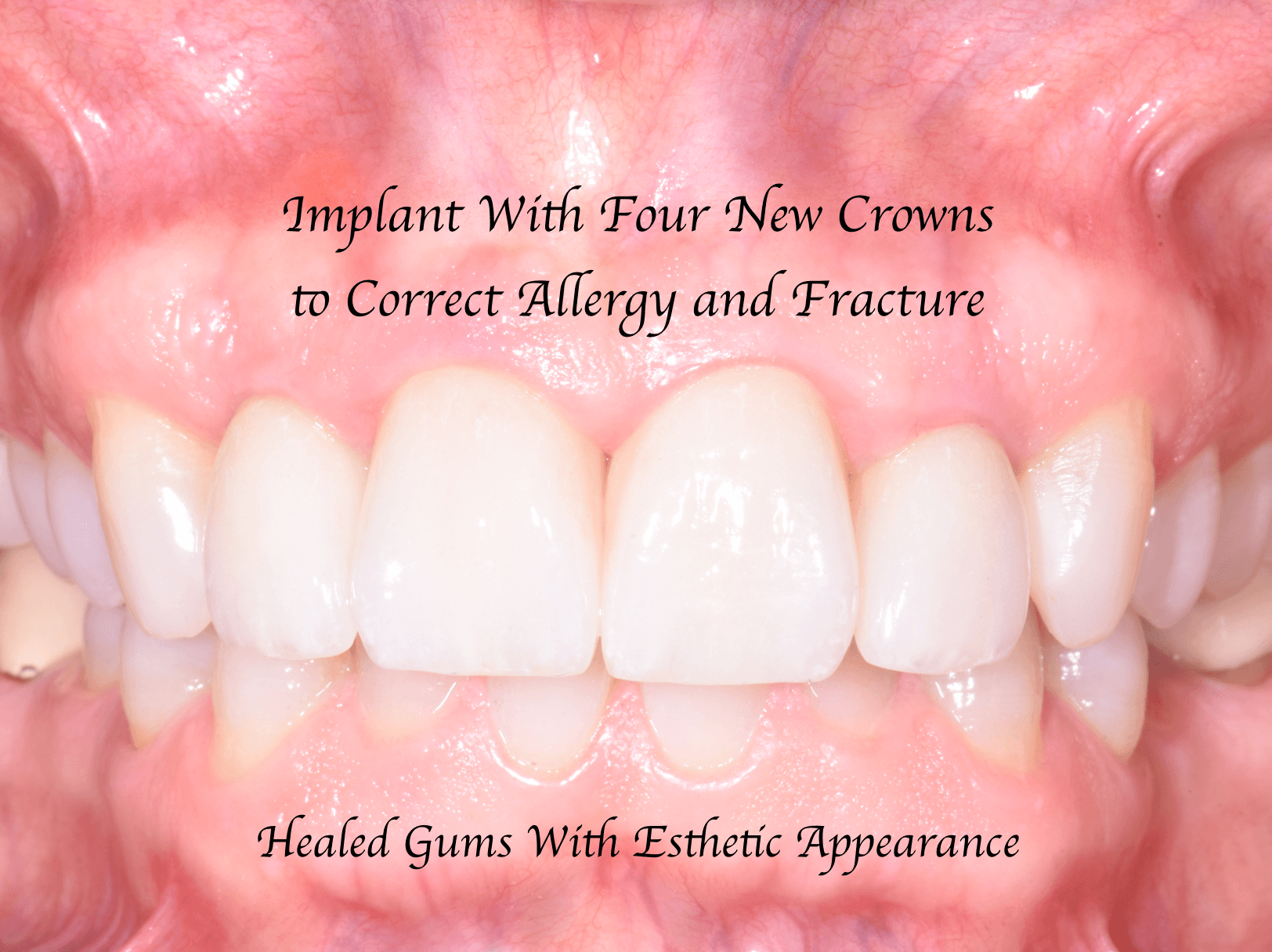
Individual results may vary. All cases performed by Dr. Michaelangelo Aust, DDS.
“I observed the knowledge and skills you brought and the careful attention to the minutest details applied to my case. Before you came into the room, a couple of the staff said ‘this doctor is AWESOME’ — so nice that was not a euphemism but a description based in the respect they had for you. Beyond your skills though, was the absolute personal caring that you have for people. You are one of the most caring people I’ve met in a long time.”
Andy S.
All-on-4 Patient
The Gold Standard
There's something that happens when a person who has been hiding their smile finally lets it go. I've seen it thousands of times in my practice. The moment the procedure is complete — the first time they look in the mirror — something shifts. Their whole body relaxes. They laugh a little louder. They hold their head differently. That's why I do this work.
Missing teeth affect far more than aesthetics. They change the way you eat, the way you speak, and the way you carry yourself in every room you walk into. Over time, missing teeth cause jawbone deterioration, shifting of surrounding teeth, and changes to your facial structure. But beyond the clinical consequences, there is the daily emotional weight — the instinct to cover your mouth when you laugh, to order soft foods at restaurants, to avoid photos. That weight is real, and it doesn't have to be permanent.
Dental implants are the gold standard for tooth replacement — and for good reason. Unlike dentures or bridges, implants actually integrate into your jawbone through a process called osseointegration. They become part of you. They don't slip, click, or need adhesive. You eat what you want, laugh without hesitation, and care for them exactly like natural teeth. In my 20+ years and over 10,000 patients, I've watched dental implants change lives — not just smiles. That's the whole point. Smiles Change Outcomes™.
Precision Craftsmanship
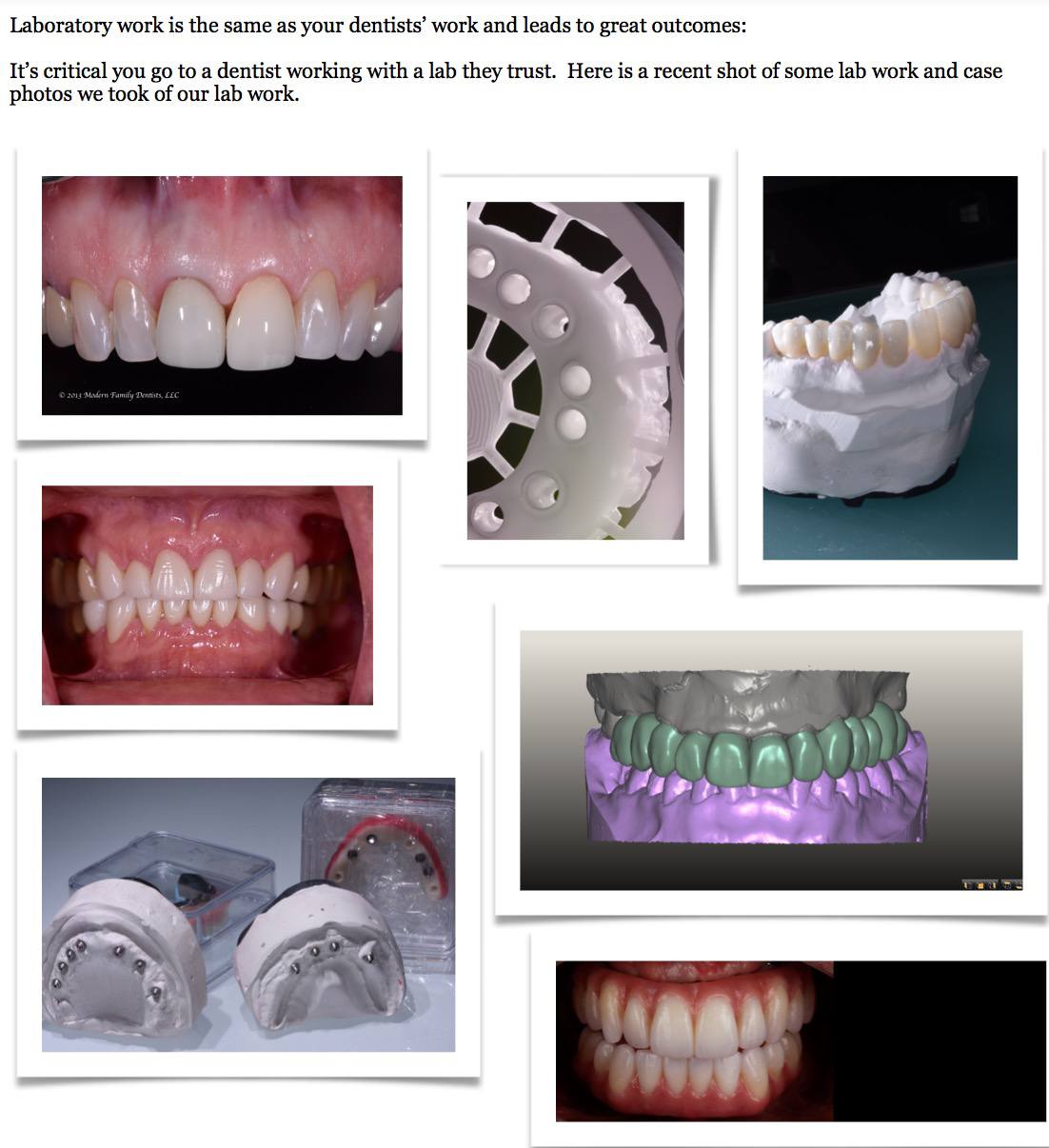
Laboratory Work Is the Same as Your Dentist’s Work
It’s critical you go to a dentist working with a lab they trust. Here is a recent shot of some lab work and case photos we took of our lab work.
Why Implants
Eight Reasons Patients Never Look Back
Indistinguishable from Natural Teeth
Each implant is custom-designed to match the color, shape, and proportions of your surrounding natural teeth. Unlike dentures, which can look and feel foreign, implants become a permanent part of your smile. Most patients tell us their friends and family can't tell — and that's exactly the goal.
Permanent — They Don't Move
Implants are anchored directly into your jawbone, which means they cannot slip, click, or shift. No denture adhesive. No embarrassing moments mid-sentence or mid-meal. Whether you're eating, laughing, kissing, or speaking in public, your implants stay exactly where they belong.
Preserves Your Jawbone and Facial Structure
When a tooth is lost, the jawbone in that area begins to deteriorate because it's no longer being stimulated. Traditional dentures sit on top of the gum and do nothing to stop this process. Implants, however, are embedded in the bone — stimulating it the way a natural tooth root would, preventing bone loss and preserving the natural contours of your face.
Protects Surrounding Teeth
Traditional bridges require grinding down the healthy teeth on either side of the gap to serve as anchors. That means two good teeth are permanently altered to support one replacement. Implants are entirely self-supporting — no healthy tooth is sacrificed. Your surrounding teeth are left completely untouched.
Eat Whatever You Want
Denture wearers often develop a restricted diet — avoiding hard, chewy, or crunchy foods out of fear of damage or embarrassment. With implants, there are no food restrictions. Eat the steak, the corn on the cob, the crusty bread. Your implants can handle it.
Long-Term Value
The upfront investment in implants often surprises people — but when you factor in that implants are designed to last 30, 40, even 50+ years, the math changes. Traditional dentures need to be replaced every 5–10 years, and the ongoing costs of adhesives, repair, and replacement add up. Quality implants, properly maintained, are a one-time investment.
Effortless Care
Implants are cared for exactly like your natural teeth — brush, floss, regular cleanings. No overnight soaking, no special cleaning tablets, no removal. Many patients with implants use a water flosser for extra cleaning around the implant margins, but otherwise the routine is identical to caring for natural teeth.
Restored Confidence and Quality of Life
This is the one that matters most to me as your dentist. I've treated patients who avoided social events, canceled dates, turned down job opportunities — all because of their smile. After implants, something fundamental shifts. They smile in photos. They laugh out loud. They engage with the world differently. Your smile affects everything you do. That's not marketing — it's something I've witnessed thousands of times.
What They Are
How Dental Implants Work
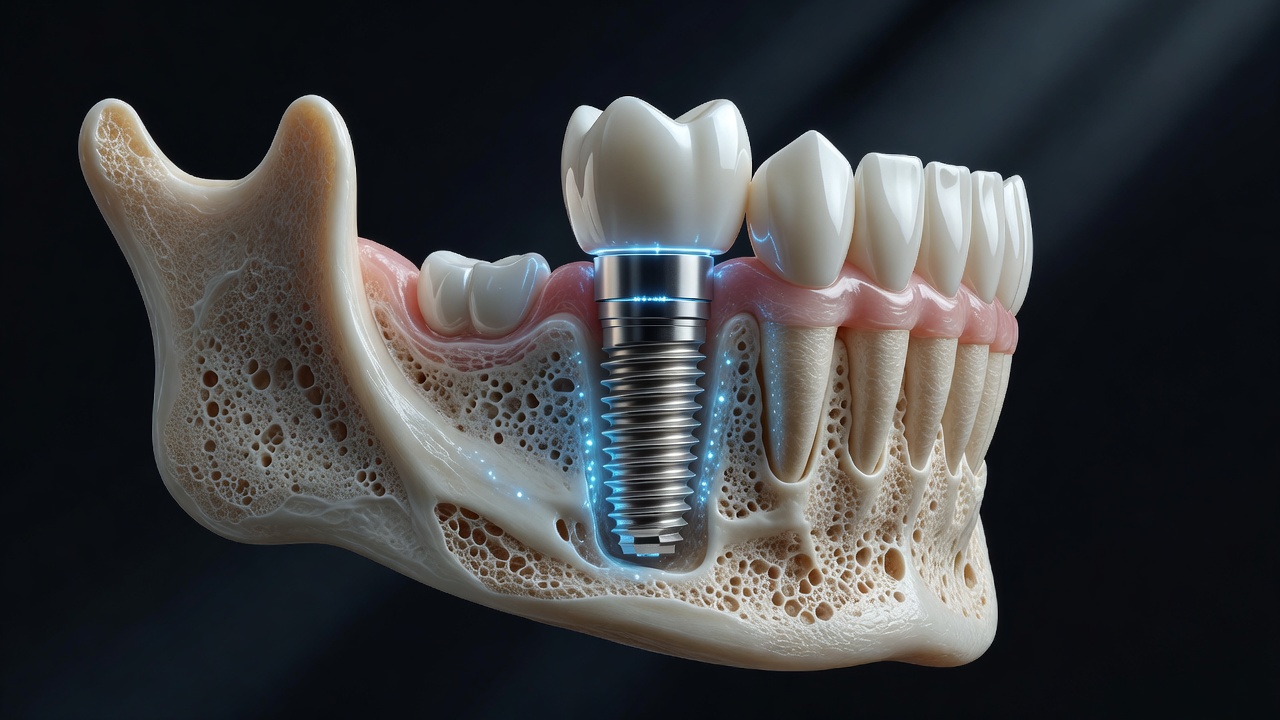
A dental implant is a titanium post surgically placed into the jawbone to serve as an artificial tooth root. Once it fuses with the bone (typically over several months), a custom-made crown is attached on top — crafted to match the color, shape, and size of your natural teeth. The result looks, feels, and functions like a real tooth. No one will know it's there unless you tell them.
Every implant has three components: the fixture (the titanium post implanted in the jawbone), the abutment (a connector that links the fixture to the crown), and the crown itself (the visible tooth portion, custom-designed for your mouth). At Advancements in Dental Care, we use Zirconia with feldspathic porcelain windows — a glass-free ceramic with superior strength and lifelike appearance. Zirconia withstands the pressure of biting and chewing for decades, while the feldspathic porcelain ensures your new tooth blends seamlessly with your natural smile. The success rate of implants exceeds 98%, making them one of the most predictable procedures in all of dentistry. Dental implants have been in use for over 30 years, and when properly placed and cared for, they can last a lifetime.
The Journey
Your Implant Process, Step by Step
New Patient Exam
Your journey begins with a comprehensive new patient exam at our Brookfield office. We'll review your goals, your dental and medical history, and take 3D imaging to understand your full oral health picture. There's no pressure — just an honest, thorough conversation about your options before we ever propose treatment.
3D CT Scan Imaging
We use cone beam CT (CBCT) technology to generate precise 3D images of your teeth, jawbone, and nerve pathways. This is a critical step that standard X-rays simply cannot replace. The CT scan shows us the exact bone density, available bone volume, nerve locations, and sinus anatomy — everything we need to plan your implant placement with surgical precision. The scan takes only minutes and is completely painless.
Comprehensive Examination and Treatment Planning
Using your 3D images, we conduct a thorough examination of your teeth and oral health. We review your medical history, medications, any existing restorations, and periodontal health. For patients receiving more than two implants, we also assess bone suitability and determine whether bone grafting may be needed before implants can be placed. From this evaluation, we build a fully personalized treatment plan — and give you a clear, transparent cost estimate.
Pre-Surgical Preparation
Once the treatment plan is confirmed, we take impressions of your teeth and gums so that your final restorations can be custom-fabricated in the lab. Depending on the complexity of your case, there may be one to four lab appointments before surgery. If you're on certain medications, a medical consultation with your primary care physician may also be required before we can proceed.
Implant Surgery
On the day of surgery, you'll receive a dental block (local anesthetic) and, if desired, sedation options including nitrous oxide or oral sedatives to keep you comfortable and relaxed. Any teeth requiring extraction are removed at this stage. The surgeon creates a small incision in the gum tissue, drills a precise channel into the jawbone, and places the titanium implant. For full-arch cases (All-on-4 or All-on-6), all implants are placed in a single session. Temporary crowns may be attached the same day, so you often leave with restored teeth.
Healing and Osseointegration
Over the next several months, the implant fuses with your jawbone through a process called osseointegration. This is what makes implants so strong — the bone literally grows around and bonds to the titanium post. You'll have follow-up check-ins at 2 weeks, 2 months, 4 months, and 6 months post-surgery. Most patients can continue normal work and daily activities between appointments.
Final Restoration
Once osseointegration is complete — typically at 4 to 6 months, depending on bone density and healing — your final permanent crown or bridge is attached. This is the moment your smile is complete. The final restoration is fabricated to match your surrounding teeth in color and shape. For most patients, it's the appointment they've been waiting for.
Which Type Is Right For You
Implant Options
Single Tooth Implant
The most common implant procedure, ideal for replacing one missing or damaged tooth. A single titanium post is placed in the jawbone and crowned with a custom restoration. No surrounding teeth are altered. The implant is self-supporting and designed to last a lifetime. This is often the best solution when a bridge would otherwise require grinding down healthy adjacent teeth.
Implant Bridge (Multiple Missing Teeth)
When you're missing two or more adjacent teeth, an implant-supported bridge provides excellent support without sacrificing healthy surrounding teeth. Two or more implants anchor a bridge that spans the gap — distributing bite pressure evenly across all connected implants. Implant bridges can often be completed in a single day and require no special maintenance beyond normal oral hygiene.
All-on-4 (Full Arch Replacement)
The All-on-4 system uses four strategically placed implants to support an entire arch of teeth — upper or lower. Rather than replacing each tooth individually, a custom-designed full arch of teeth is anchored to just four implants. This approach is more cost-effective than individual implants for each tooth, less invasive, and can often be completed in a single day. Dr. Aust also performs what he calls the 'All-on-As-Many-As-Possible' technique — placing as many implants as the case requires for a single flat fee, ensuring maximum support.
All-on-6 (Enhanced Full Arch)
Similar to All-on-4 but with six implants supporting a full arch — providing additional stability and support, particularly for the upper jaw where bone density may be lower. All-on-6 is often preferred when extra implant support will improve the long-term durability and comfort of the restoration. Dr. Aust prefers using as many implants as are clinically appropriate, not the minimum required.
Implant-Supported Dentures (Overdentures)
For patients who currently wear full or partial dentures, implant-supported overdentures offer a dramatically better experience. Multiple implants are placed to anchor the denture securely — eliminating slippage, clicking, and the social anxiety that accompanies traditional removable dentures. The denture attaches to the implants via ball-and-socket connectors, offering stability far beyond anything denture adhesive can provide.
Mini Implants vs. Standard Implants
Mini implants are roughly half the diameter of standard implants and approximately half the cost — but two mini implants provide equivalent support to one standard implant. While mini implants have a role in specific situations (particularly when jawbone volume is limited), Dr. Aust generally prefers standard implants because of their superior long-term design, stability, and track record. Your CT scan will determine which option is appropriate for your anatomy.
Advanced Diagnostics
Why We Use CT Scan (CBCT) Technology for Implant Planning
Before any implant procedure, we perform a dental cone beam CT scan — and this step is non-negotiable. A conventional dental X-ray gives us a two-dimensional image. A CT scan gives us a fully three-dimensional view of your jawbone, nerve pathways, sinus structures, and existing teeth. That difference is everything when we're placing a titanium post into your jaw.
The cone beam CT scanner at Advancements in Dental Care captures detailed cross-sectional 3D images in approximately one minute. The radiation dose is considerably lower than that of a conventional medical CT scan, and the entire positioning and imaging process takes about 30 minutes. You will be asked to remove metal accessories (glasses, jewelry, hearing aids) before the scan. No injections or special preparation are required.
What does the CT scan tell us? First, it shows us the exact shape and density of the bone where each implant will be placed. Second, it reveals the precise location of the inferior alveolar nerve — a critical landmark we must avoid during lower jaw implant surgery. Third, it shows sinus proximity for upper jaw implants. Fourth, it allows us to digitally simulate the implant placement before we ever enter the operating room, confirming ideal positioning with complete precision.
After your scan, we analyze the images and begin building your personalized treatment plan. There is simply no alternative that provides the same level of detail and safety for implant surgery. The CT scan is how we ensure that your implants are placed exactly right — the first time.
Why Dr. Aust
A Master of Oral Implantology in Brookfield
At Advancements in Dental Care, dental implants are not a side service — they are our specialty. Dr. Michaelangelo Aust, DDS has dedicated his career to implant and restorative dentistry, accumulating approximately 300 hours of advanced education per year (compared to the 25-hour minimum required for licensure). That's not a small difference — that's the difference between a dentist who learned implants in a weekend course and one who has spent years mastering them. Our practice is fee-for-service, which means we are not constrained by insurance network agreements that limit what procedures can be done or which materials can be used. Every treatment decision is made based on what is clinically best for you — not on what an insurance company will authorize. This model attracts patients who are serious about their long-term dental health and understand that excellent care is worth investing in. We use cone beam CT imaging technology for every implant case, allowing us to plan with a level of surgical precision that conventional X-rays cannot provide. Our implant materials — Zirconia with feldspathic porcelain — represent the highest standard in restorative dentistry for both durability and aesthetics. Perhaps most importantly, Dr. Aust takes the time to know you. Not your chart — you. After treating over 10,000 patients, he understands that dental anxiety, financial concerns, and the emotional weight of missing teeth are all part of the conversation. His approach is direct, personal, and thorough. He will tell you what you need to hear, show you your options clearly, and work with you to find a path forward. This is a practice built on outcomes — real, life-changing outcomes for real people. That's what "Smiles Change Outcomes™" means to us. Located at 9224 Broadway Ave, Brookfield, IL 60513. Call us at (708) 485-0340 to schedule your consultation.
Common Questions